
Shaping the Future with Intelligent Technologies and Innovative Solutions
The Department of Computer Science & Engineering (Artificial Intelligence & Machine Learning) is a distinguished and future-focused academic hub dedicated to nurturing skilled professionals in the rapidly advancing domains of AI, ML, Data Science, and Intelligent Computing. Established to meet the global demand for AI-driven solutions, the department offers a holistic academic environment combining strong theoretical foundations, practical exposure, and research-oriented learning.
With cutting-edge laboratories, industry collaborations, and expert faculty, the department equips students with the knowledge and skills required to excel in next-generation technologies and contribute to real-world intelligent systems.
To become a premier centre of excellence in Artificial Intelligence and Machine Learning education, research, and innovation, producing globally competent professionals committed to technological advancement and societal progress.
The curriculum is designed to provide a perfect blend of foundational courses and specialized AI & ML subjects:
The program emphasizes project-based learning, analytical thinking, and real-time case studies.
The department consists of experienced faculty with expertise in:
Faculty actively engage in research, publishing, and guiding innovative projects.
The department hosts modern labs with GPU systems and AI/ML tools like:
Dedicated labs include:
Students work on innovative real-world projects such as:
The department regularly organizes:
Students and faculty actively participate in research, publish papers, and present at conferences. The environment encourages exploration of emerging areas such as Explainable AI, Edge AI, Robotics, and Human–Computer Interaction.
Modern classrooms with ICT tools for interactive learning.
A well-curated collection of books, journals, research publications, and e-resources supports advanced learning and innovation.
Graduates of CSE (AI & ML) can pursue roles such as:
The program opens pathways to top tech companies, research labs, startups, and higher education opportunities.

| Sl.No | Branch | Convenor | Management | Total |
|---|---|---|---|---|
| 1 | CSE-AI&ML | 42 | 18 | 60 |
Degree in Engineering / Technology / Commerce / Banking / Business Administration / Computer Application / Science with Mathematics as one of the subjects.
Any degree with a PG Diploma in Computer Science / Computer Application of minimum of 1-year duration of recognized University.
Any degree with a PG Diploma in Computer Science / Computer Application of minimum of 1-year duration of recognized University.
Admission into various programmes of Sri Chaitanya Institute of Technology and Research(SCIT), Khammam is done through Common Entrance Tests conducted by Telangana State Council of Higher Education, Hyderabad.
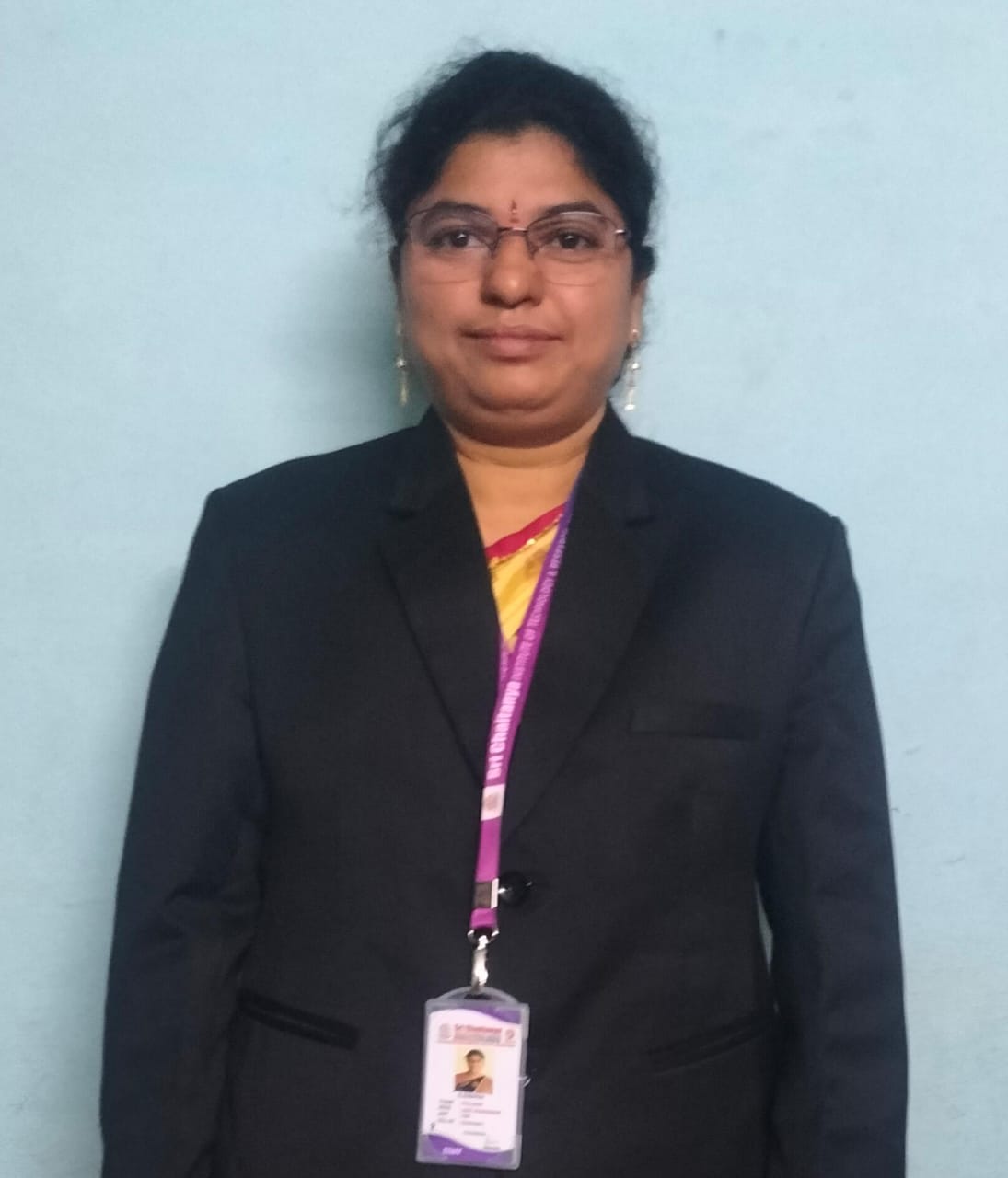
The Department of Computer Science and Engineering (AI & ML) is supported by a team of highly qualified, skilled, and dedicated faculty members who specialize in Artificial Intelligence, Machine Learning, and advanced computing technologies. The faculty focus on providing students with strong theoretical foundations, hands-on practical skills, and exposure to cutting-edge AI tools and applications.

+1234 567 890
sri@chaitanya.com
ASSOC.PROF

+1234 567 890
sri@chaitanya.com
ASST.PROF

+1234 567 890
sri@chaitanya.com
ASST.PROF
+1234 567 890
sri@chaitanya.com
ASST.PROF

To support AI & ML research and development, our department provides:
Objectives, Outcomes & Competencies
To prepare graduates with a strong foundation in computer science, mathematics, statistics, artificial intelligence, and machine learning required to solve complex computational and real-world problems.
To develop graduates capable of designing intelligent systems, building AI/ML models, and applying analytical and algorithmic thinking to develop innovative solutions across diverse domains.
To instill ethical values, fairness, transparency, accountability, and responsible use of AI technologies for the benefit of society.
To enable graduates to work effectively in multidisciplinary environments with strong communication, teamwork, and leadership abilities.
To motivate graduates to pursue continuous learning, research, certifications, and adapt to emerging AI, ML, and data-driven technologies.
Apply knowledge of mathematics, science, computing, AI, and machine learning fundamentals to solve complex engineering problems.
Identify, formulate, and analyze AI/ML-related problems using statistical, computational, and analytical techniques.
Design intelligent systems, ML models, algorithms, and AI-based applications that meet user needs and societal requirements.
Use research-oriented methods such as experimentation, data exploration, model evaluation, and performance analysis to reach meaningful conclusions.
Use modern programming languages, AI/ML frameworks, cloud platforms, and automated tools for developing and deploying intelligent systems.
Assess societal, ethical, and legal implications of AI systems, including fairness, privacy, security, and responsible usage.
Understand the computing resource consumption and environmental impact of AI systems and promote energy-efficient and sustainable AI solutions.
Apply ethical principles in AI development, data handling, algorithmic transparency, and professional practice.
Function effectively as an individual and as a member or leader in diverse, multidisciplinary AI project teams.
Communicate effectively through technical reports, publications, presentations, and visualizations with both technical and non-technical audiences.
Apply engineering and management principles to plan, develop, and manage AI/ML projects efficiently.
Recognize the need for continuous learning and engage in professional development, research, and certifications in emerging AI/ML technologies.
Ability to apply machine learning, deep learning, natural language processing, and reinforcement learning techniques to develop intelligent models and applications.
Ability to design, implement, and deploy AI-driven systems using modern tools, cloud platforms, and scalable architectures.
Ability to preprocess, analyze, and manage data pipelines and apply computational intelligence techniques for reasoning, prediction, and decision-making.
Ability to design AI solutions ensuring fairness, accountability, transparency, privacy, and compliance with global AI standards.